
History of Taekwondo: From Ancient Korean Warriors to Olympic Sport (2026 Guide)
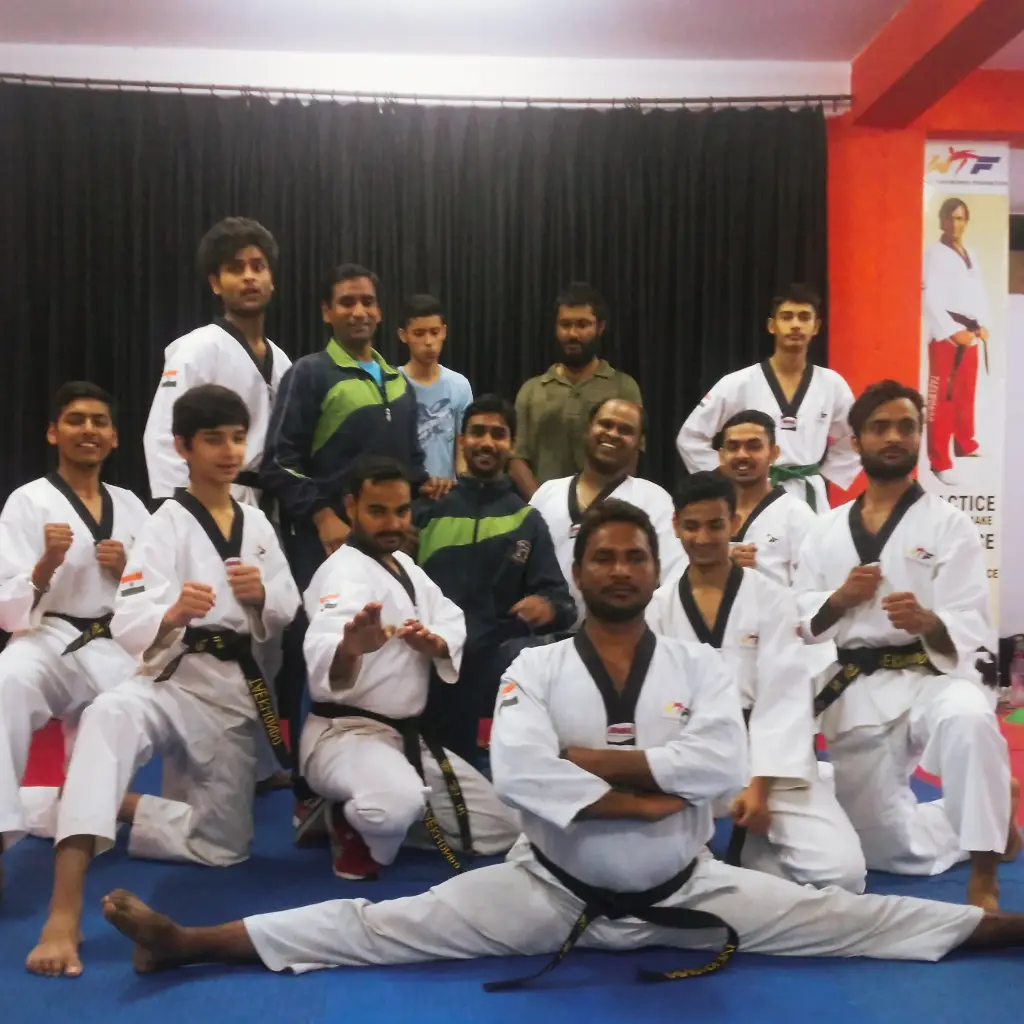
Every time a student steps onto the dojang floor at Om’s Academy in Jaipur, they engage in a tradition stretching back over two thousand years. This practice spans ancient Korean kingdoms, periods of foreign occupation, and a relentless climb to the world’s most prestigious sporting stage. Understanding this history goes beyond academic interest; it provides the context for every movement you perform. When you execute a perfect roundhouse kick, you are carrying the weight, philosophy, and spirit of generations who preserved these techniques long before modern technology existed.
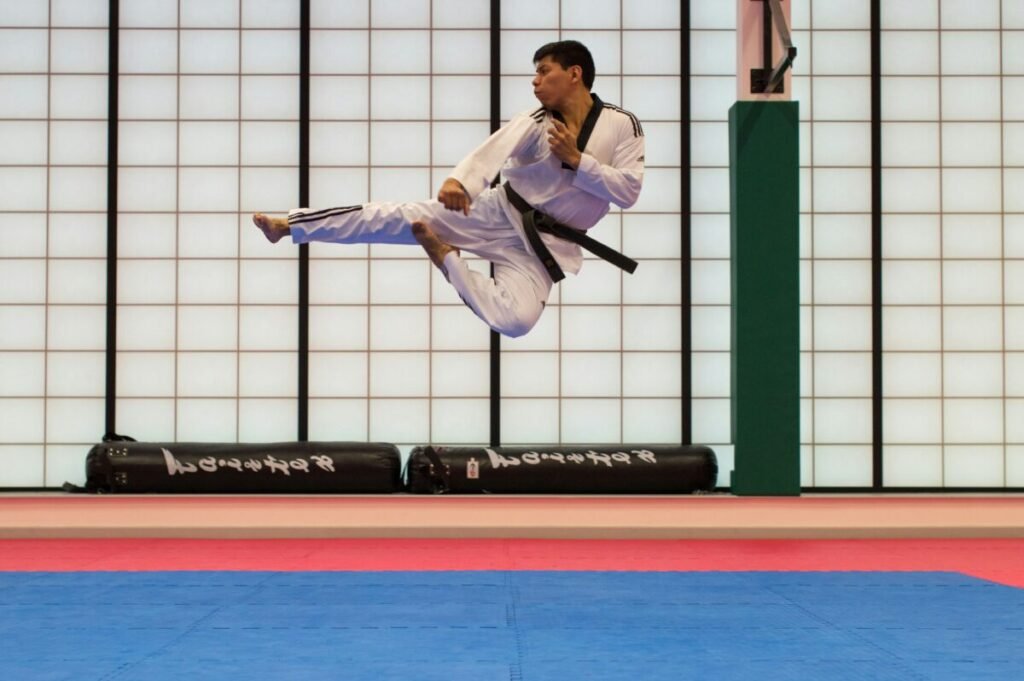
The word Taekwondo itself serves as a roadmap. Broken down from its Korean roots, Tae represents the foot or the act of striking with the leg. Kwon signifies the fist or the hand. Do translates to the way or the path. Together, it is more than a combat system; it is a discipline and a philosophy. For those of us at Om’s Academy, it is a lifestyle that demands respect, consistency, and self-control alongside physical technique.
We follow the World Taekwondo (WT) curriculum, the same framework that governs Olympic competition. This guide traces the arc of Taekwondo’s evolution, from its earliest origins among ancient Korean warriors to its current status as a global sport practiced in over 213 countries. Whether you are a beginner tying your first white belt or an advanced student working toward your dan promotion, this perspective will deepen your connection to your training.
Ancient Korean Roots: Where It All Began
The Three Kingdoms Period (57 BCE – 668 CE)
The earliest evidence of structured martial arts on the Korean Peninsula emerges from the Three Kingdoms period: Goguryeo, Baekje, and Silla. These kingdoms existed in a state of constant military friction, necessitating the development of sophisticated combat systems. For these people, training was not a hobby or a fitness pursuit; it was a matter of survival and national defense.
Archaeological evidence remains our most reliable witness. The Muyongchong and Ssangnyong tombs contain wall paintings dating back to the 4th century CE. These murals depict figures in stances remarkably similar to those we teach today. You can clearly see practitioners in deep, stable postures, preparing for what looks like sparring. These are not merely symbolic drawings; they are technical records showing that structured fighting arts thrived in Korea over 1,500 years ago.
Subak and Taekkyeon: The Ancestor Arts
Two primary systems dominated this era: Subak and Taekkyeon. Subak functioned as a hand-striking and grappling art, often utilized by military personnel. Records from the Goryeo dynasty indicate that Subak competitions were held at royal court events, proving that even in antiquity, martial arts possessed a spectator-friendly dimension.
Taekkyeon, however, focused on the fluid, sweeping footwork that defines modern Taekwondo. It emphasized tripping, sweeping, and dynamic kicking motions designed to dismantle an opponent’s balance. While Subak refined the hand strikes, Taekkyeon provided the leg-dominated movement patterns that would eventually become the hallmark of our art.
The Hwarang Warriors of Silla
The Hwarang, an elite warrior corps of the Silla kingdom, provided the philosophical backbone for modern Taekwondo. These young aristocrats were selected not just for their physical prowess, but for their moral character. They lived by the Five Commandments of the Hwarang, which included loyalty, courage, and the avoidance of unnecessary violence. At Om’s Academy, we still emphasize these values. When Om Sir speaks about discipline over motivation, he is echoing the same ethos that guided these ancient warriors through their training in archery, swordsmanship, and unarmed combat.
The Japanese Occupation and the Struggle to Preserve Korean Martial Arts (1910–1945)
The 35-year Japanese occupation beginning in 1910 nearly silenced Korea’s martial traditions. The colonial government suppressed indigenous practices like Taekkyeon, forcing masters to teach in secret. During this time, many Koreans traveled to Japan, where they were exposed to Shotokan Karate. They adopted the structured belt systems and curriculum formats common in Japan, yet they never abandoned their own heritage.
This period created a hybrid environment. When Korea gained liberation in 1945, these practitioners returned home with a technical framework learned in Japan, but they were driven by a nationalistic desire to reclaim their identity. They merged the precision of the systems they studied abroad with the traditional Korean kicking methods that had survived underground. This synthesis is exactly what led to the birth of the art we practice today.
The Birth of Modern Taekwondo (1945–1973)
The Nine Kwans: Korea’s Original Martial Arts Schools
Following liberation, nine primary schools, or kwans, emerged. Each school—such as Chungdokwan, Songmookwan, and Moodukkwan—contributed different technical nuances. Chungdokwan, for instance, became famous for its powerful, linear striking, while others focused on more circular, fluid motions. This period was chaotic but necessary; it allowed for the rapid expansion of martial arts across a newly freed nation.
The Naming of Taekwondo: April 11, 1955
By the mid-1950s, the fragmentation of these nine schools created confusion. A naming committee met on April 11, 1955, to unify the art under a single banner. General Choi Hong-hi proposed the name Taekwondo. The choice was deliberate. By selecting a name that used Korean linguistic roots rather than Chinese-derived characters, the leadership signaled that this was an independent, sovereign art form.
Kukkiwon: The Spiritual and Technical Home
The construction of the Kukkiwon in 1973 finalized this unification. It became the central authority for curriculum, belt standards, and poomsae development. Today, a black belt issued by the Kukkiwon serves as a passport to any dojang in the world. When a student at our Jaipur studio earns their rank, they are receiving an internationally recognized credential that validates their technical proficiency against global standards.
Going Global: From Korean Dojang to the Olympic Stage
Taekwondo’s rise to the Olympics was meteoric. After the establishment of the World Taekwondo Federation (WTF) in 1973, the sport organized rapidly. The 1988 Seoul Olympics served as the perfect platform, showcasing Taekwondo as a demonstration sport. By 1994, the International Olympic Committee voted to include it as an official medal sport for the 2000 Sydney Games.
This transition changed the sport forever. It introduced electronic scoring systems (hogu) and video replay, which removed human error and focused the sport on pure athletic performance. It also standardized the competitive format, making it one of the most accessible and fair martial arts on the planet.
India and Taekwondo: The Road Ahead
Taekwondo arrived in India in the mid-1970s. While our journey to the Olympic podium has faced hurdles due to the intense international competition, we have seen massive growth in infrastructure. The rise of para-athletes like Aruna Tanwar, who competed in both the Tokyo and Paris Games, proves that Indian athletes can reach the world’s elite levels. At Om’s Academy, we have trained over 25,000 students, and we see the talent and grit required to compete on the global stage every day. The infrastructure in India is evolving, and with the right focus on the Kukkiwon standards, the next generation of Indian Olympians is currently training in dojangs just like ours.
Taekwondo in 2026: Why It Remains Timeless
In 2026, Taekwondo stands as a blend of ancient wisdom and modern performance science. While we use digital sensors to track points and high-speed cameras for judging, the core experience remains unchanged. The discipline required to master a form, the humility needed to accept a belt promotion, and the grit required to spar with a superior opponent are universal.
Om Sir’s 32+ years of experience has taught us one vital lesson: technology changes, but the human requirement for discipline does not. Whether you are training for self-defense, Olympic glory, or personal growth, the path is the same. We invite you to join us at Om’s Academy to experience this history firsthand. Every class is a step forward, and every student contributes to the next chapter of this living tradition.
Om’s Academy, Jaipur | Authorised Kukkiwon Curriculum | World Taekwondo (WT) Affiliated