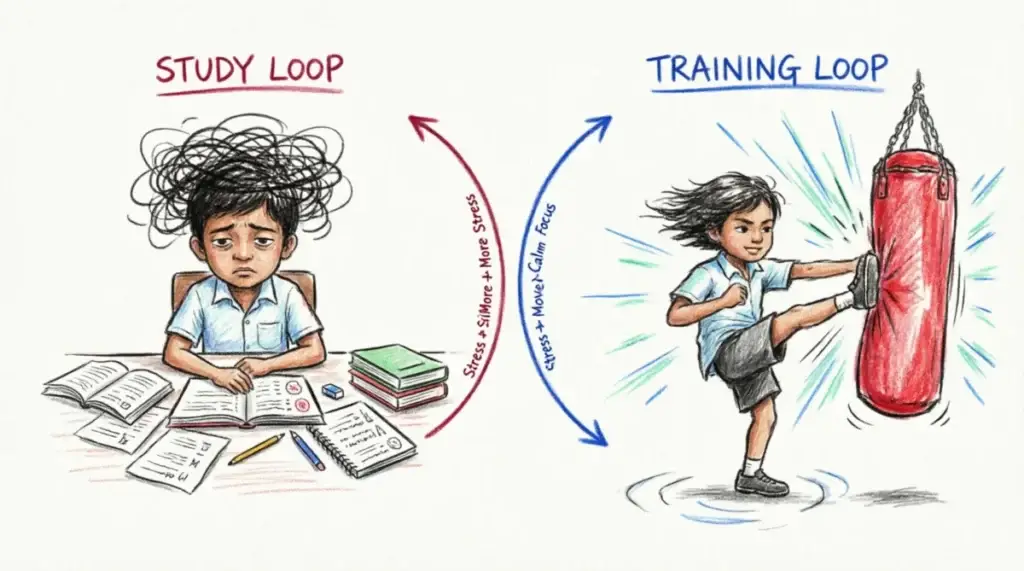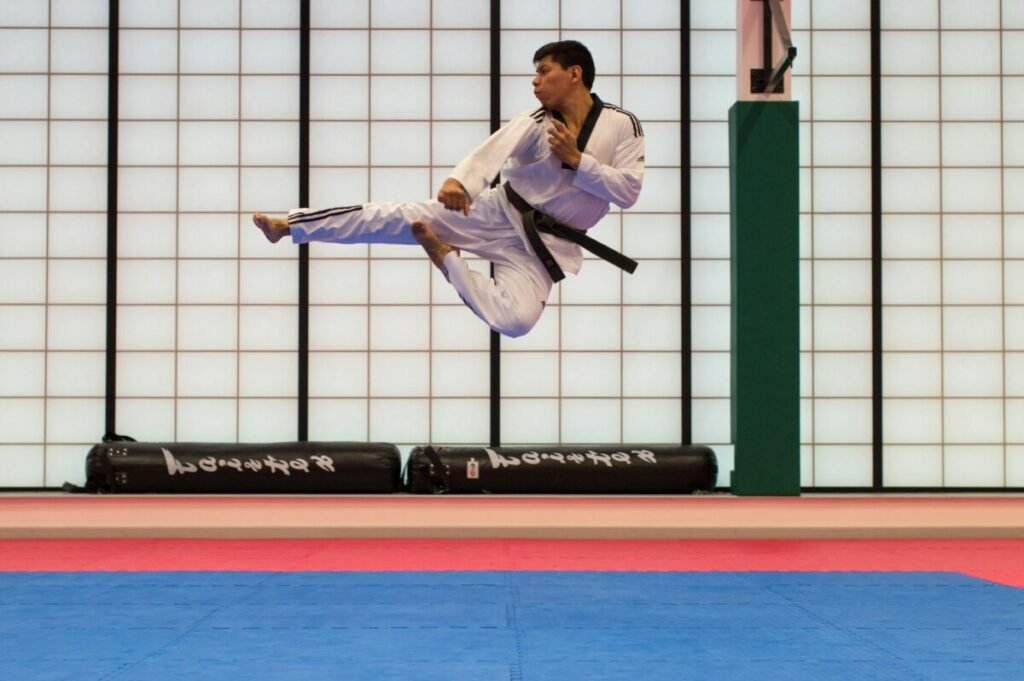

Last Tuesday, a father sat on our bench at Om’s Martial Arts & Fitness Studio, his hands shaking slightly as he watched his son struggle to stand still during the opening bow. He looked at me and whispered, “I don’t know how to reach him anymore.” I have heard that same sentence hundreds of times in my 32 years of teaching in Jaipur. You aren’t failing your child, and your child isn’t broken. You are just fighting a battle against a system that demands stillness from a brain that is wired for constant, rapid-fire motion. That is exactly why Taekwondo classes Jaipur parents trust are not just about kicking pads; they are about teaching a child how to inhabit their own body with intention.
You see, most people think martial arts is about teaching a child to be a fighter. I see it differently. After training over 25,000 students, I have learned that the mat is the only place where a child with ADHD can turn that internal noise into a focused rhythm. When your child steps onto my floor, they aren’t just another student. They are a warrior learning to command their own attention. We don’t rely on motivation, which burns out by lunch. We rely on the raw, unpolished grit of discipline. You’ve likely tried every sticker chart and reward system in the book, yet the restlessness remains. Why? Because the brain needs a physical anchor, not a verbal lecture.
I’ve made my share of mistakes as a coach. Early in my career, I tried to force stillness through rigid, military-style shouting. It backfired. I learned that you cannot shout focus into a child; you have to build it through movement. At our academy, we use patterns—the structured, repetitive sequences of Taekwondo—to create a mental map for the brain. We are going to look at why these patterns act as a reset button for a scattered mind, how we move past the chaos of an ADHD diagnosis to find genuine control, and how you can support this process at home without turning your living room into a battleground.
You are tired of hearing “he just needs to pay attention.” You want practical tools that actually work when the school report card comes back red. You want to see that spark of pride in your child’s eyes when they finally master a complex sequence they couldn’t even stand still for a week ago. If you are ready to stop fighting the energy and start directing it, let’s talk about why your child’s brain is actually built for the dojo. Are you ready to see what happens when we stop labeling the behavior and start training the focus?
Beyond the Classroom: Why ADHD Brains Crave Martial Arts
Last Tuesday, a mother sat on the bench by the door, watching her seven-year-old son struggle to stand still during the opening bow. He was vibrating with energy, his eyes darting to the ceiling, his feet shuffling incessantly. She looked exhausted, the kind of tired that comes from fighting a war against homework assignments and morning routines. I walked over and told her: “Don’t apologize for his energy. That is exactly what we are going to use to build his focus.”
Many people assume a dojo is a chaotic place for a child who already struggles with regulation. They fear the shouting, the movement, and the intensity will send a child with ADHD into a tailspin. I’ve been teaching for 32 years, and I can tell you that the opposite is true. When we provide structure, that “noise” isn’t a distraction—it is a signal.
The Biology of the Mat
Your son’s brain is not broken; it just processes the world at a different frequency. When he steps onto our mats, he isn’t just kicking air. He is engaging in bilateral movement—using both sides of his body in coordination. This forces the prefrontal cortex to wake up. Research from groups like the Edge Foundation shows that this kind of exercise acts like a natural pharmacy. It pumps dopamine, norepinephrine, and serotonin directly into the system. These chemicals are the exact tools the ADHD brain lacks to regulate impulse control.
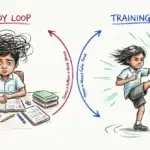
Think of it like this: if you leave a child with ADHD in an unstructured environment, their brain is searching for stimulation. In the classroom, that might look like tapping a pencil or blurting out an answer. In our studio, we give that craving a specific target.
| Feature | Unstructured Play | Martial Arts Training |
|---|---|---|
| Feedback Loop | Delayed or absent | Immediate (hit or miss) |
| Neurotransmitter Boost | Inconsistent | High (dopamine/serotonin) |
| Executive Function | Low demand | High demand (memory/inhibition) |
Immediate Feedback and the ADHD Brain
The magic isn’t just in the sweating; it’s in the immediate consequence. If your child throws a punch with a dropped guard, I correct it instantly. If they execute a perfect high block, they get immediate acknowledgment. There is no waiting for a report card or a gold star at the end of the week. That instant loop is vital. It trains the brain to pause, assess, and act.
I’ve seen students who couldn’t sit for two minutes in a chair stand perfectly still for ten minutes to master a single form. Why? Because the form gives them a goal. It turns their restlessness into a sequence of deliberate, physical commands.
Some parents worry that the intensity of a martial arts class will overstimulate their child. That’s a fair concern, but only if the class is chaotic. At our studio, we use “Discipline Over Motivation.” We don’t rely on the child *wanting* to behave; we rely on the routine to *make* them behave. We provide the container, and their brain fills it with the focus they were missing all day.
Look, your child doesn’t need to be “fixed.” They need to learn how to drive a high-performance engine. It’s my job to teach them how to shift the gears.
Next time you are at home, try this: give them a physical task that requires counting—like twenty squats or ten slow, controlled punches—right before they start their reading homework. Watch what happens to their ability to settle down. Are you ready to stop fighting the energy and start training it?
Discipline Over Motivation: The Secret Sauce at Our Jaipur Dojo
Last Tuesday, a mother sat on the bench in my Jaipur studio, watching her son struggle to hold a front stance. She whispered, “He just doesn’t have the motivation today, Om Sir. Can we give him a sticker or a small prize if he finishes the set?” I looked at her, smiled, and shook my head. We don’t trade kicks for stickers here. If you rely on a reward to get your child to move, you are training them to be a mercenary, not a martial artist.
I have spent 32 years on these mats, teaching over 25,000 students. I learned early on that motivation is a fickle friend. It shows up when the weather is nice and the energy is high, but it vanishes the moment things get difficult. Discipline, however, is a quiet engine. It runs on habit, not excitement.
Why We Ditch the Reward Charts
Psychologists like Brad Bren have pointed out that chasing external validation—like gold stars or trophies—actually kills the drive to master a skill. When you dangle a carrot, the brain stops caring about the form of the punch and starts caring only about the carrot. For a child with ADHD, this is a trap. They need to find calm in the movement itself, not in the prize at the end.
Look at the difference in how we build a student:
| Focus Area | Extrinsic Approach (Rewards) | Intrinsic Approach (Mastery) |
|---|---|---|
| Goal Setting | Winning a medal | Perfecting a single technique |
| Behavior | Seeking praise from coaches | Taking pride in self-control |
| Retention | Drops when rewards stop | Lasts for years |
Rituals as an Anchor
You might wonder how a child who can’t sit still for five minutes thrives in a traditional dojo. The secret is rhythm. Our repetitive bowing, the specific way we tie our belts, and the set sequence of our warm-ups act as a cognitive crutch. By lowering the “mental load,” we allow their brains to stop guessing what happens next. They know the ritual. They know the expectation.
One father told me last month, “Since he started here, the screaming fits when it’s time to do homework have stopped.” That isn’t magic. It’s because he learned that in the dojo, we don’t argue with the process. We just do the work.
The Danger of Rigid Rules
I see some instructors turn discipline into a prison. They shout, they punish, and they demand perfect stillness. That is not discipline; that is bullying. If you treat a child like a soldier, you break their spirit. My job is to build their character. We demand effort, yes, but we celebrate the messy, imperfect attempts that come before success. If a student is tired or struggling with their focus, we don’t punish them. We adjust the intensity, but we never lower the standard of respect.
Discipline is about showing up when you don’t feel like it. It is about honoring your word to yourself.
I’ve made plenty of mistakes as a coach. I used to think louder was better. I used to think more drills meant more skill. I was wrong. I realized that the students who stay with me for a decade aren’t the ones who were naturally gifted or motivated by shiny toys. They are the ones who learned to love the silence of the practice.
Are you ready to stop bribing your child to succeed and start teaching them how to build their own inner fire? What will you do tonight to help them value the work over the reward?
From Chaos to Control: How Taekwondo Patterns Teach Mental Stillness
Last Tuesday, a father pulled me aside after class. His son, a bright kid who struggles to sit still for ten minutes at school, had just nailed his Poomsae sequence. The father looked at me, bewildered, and asked, “How did he just stay focused for that long?” I told him the truth: we didn’t force him to sit still. We gave his brain a map to follow.
When your child practices Poomsae—the formal patterns of Taekwondo—they aren’t just memorizing kicks and punches. They are engaging in a sophisticated form of moving meditation. Research from the University of Manouba suggests that these patterns act as a genuine therapy for executive function. Think about it. To execute a pattern, a child must hold a sequence in their working memory, plan their motor movements, and adjust their balance in real-time. It’s a workout for the prefrontal cortex.
Why Sequencing Matters
Many kids I see in my studio deal with dyspraxia or ADHD, where the brain and body often feel like they are speaking different languages. Poomsae forces that connection. If they rush, they lose their balance. If they lose focus, they forget the next move.
| Action | Mental Benefit |
|---|---|
| Memorizing Steps | Strengthens working memory |
| Controlled Breathing | Regulates the nervous system |
| Motor Sequencing | Improves coordination and executive function |
I remember a student, let’s call him Rohan. He used to hit a wall of frustration every time he missed a turn in his form. He would shut down, clench his fists, and refuse to move. I had to teach him that the frustration was actually the training. I told him, “Rohan, the mistake isn’t the end. The mistake is the moment you learn to reset.” We practiced taking one deep, deliberate breath before starting over.
His mother told me later that during a stressful math test at school, he felt the same panic rising. Instead of shutting down, he closed his eyes, took that exact deep breath he learned on my mat, and restarted the problem. That is the power of our breathing work. It is not just for the dojo; it is a tool for their life.
The Myth of the Perfect Pattern
People often think that if a child can’t perform a complex pattern perfectly on day one, they are failing. That is nonsense. If your child gets frustrated and quits, that is a data point, not a failure. It tells us we need to break the sequence down into smaller, bite-sized chunks. I have spent 32 years teaching thousands of students, and I have made every mistake in the book. I’ve pushed too hard. I’ve expected too much too soon.
True discipline isn’t about being perfect; it’s about the grit required to start the pattern again after you stumble. We aren’t training robots. We are training humans to find stillness inside the noise.
- Focus on the transition between moves, not just the punch.
- Use the breath to anchor the body when the mind starts to race.
- Accept the reset as a victory, not a defeat.
Are you encouraging your child to embrace the “reset” when they make a mistake at home, or are you expecting them to get it right the first time? Next time they feel overwhelmed, don’t tell them to calm down. Ask them to show you their first three moves of their Poomsae instead. Watch what happens to their breathing when they switch their focus from the chaos to the sequence.
Comparative Training Methods: Finding the Right Path for Your Child
Last Thursday, a mother sat on the bench in my studio, watching her son struggle to track the instructor’s movements during a chaotic, high-energy group drill. She asked me, “Is he just not trying, or is the room too loud for his brain?” I told her the truth: it’s rarely about effort. It’s about the environment. When you look for a Taekwondo home for a child with ADHD, you aren’t just looking for a place that teaches kicks. You are looking for a place that understands how to modulate the sensory input of the room.
Many parents assume that a “tough” environment builds resilience. They think yelling, high-pressure sparring, and rigid military-style drills are what a distracted child needs to “snap into focus.” I’ve been teaching for 32 years, and I’ve seen this backfire every time. Authoritarian coaching—the drill sergeant approach—creates anxiety, not discipline. A child who is constantly bracing for a barked command isn’t learning focus; they are learning how to survive the next minute.
At my studio, we lean into authoritative coaching. We set high standards, but we explain the “why” behind every movement. We don’t demand obedience through fear; we build it through the respect we show our students.
The Math of Attention
In my experience, the instructor-to-student ratio is the silent factor that makes or breaks a child’s progress. If you walk into a dojo and see one instructor trying to manage 30 kids on the mat, run the other way. You cannot teach the subtle mechanics of a proper roundhouse kick to a child who needs sensory grounding if you are spread that thin.
- 1:5 ratio: Ideal for children needing intense sensory support or those just starting their training.
- 1:10 ratio: The sweet spot for general group classes where individual feedback remains possible.
- 1:20+ ratio: Avoid this if your goal is character development and personal attention.
Checklist for Your Studio Visit
Before you sign a contract, watch a class from the sidelines. Don’t look at the trophies on the wall. Look at the kids who are struggling. Are they being integrated, or are they being ignored?
| Observation Point | Green Flag | Red Flag |
|---|---|---|
| Instructor Tone | Firm, calm, clear instructions | Screaming, sarcasm, or public humiliation |
| Student Engagement | Kids are active and participating | Kids are standing in lines for long waits |
| Correction Style | Kneeling to match the student’s eye level | Pointing and shouting from across the room |
I once had a student who couldn’t stay still for more than thirty seconds. My early days as a coach, I tried to force him into the same rigid mold as everyone else. I failed him. I learned that he didn’t need a louder voice; he needed a clearer path. We broke his training into micro-tasks. He didn’t have to “master the form”; he had to “master the chambering of his knee” for three reps. That shift—from overwhelming global expectations to manageable, bite-sized wins—changed his entire trajectory.
If you are currently evaluating a school, ask the head instructor this one question: “When a student loses focus during a drill, what is your immediate response?” If they talk about punishment or “toughening them up,” walk out. If they talk about redirection, grounding, and keeping the student engaged in the flow, you have found a place that actually cares about your child’s development.
Can you commit to sitting through an entire class at your local studio this week, ignoring the fancy equipment, and watching only how the instructor handles the child who is clearly having the hardest time? What do you see when you look past the uniforms?
Parenting the Warrior: Supporting Your Child Beyond the Studio
Last Thursday, a father stood by the heavy bag, wringing his hands while his son struggled to tie his belt for the tenth time. “I just don’t know how to get him to listen at home like he does here,” he whispered. I looked at him and said, “Stop trying to be his drill sergeant and start being his partner.”
You see, the discipline your child builds on my mat—the focus, the respect, the grit—won’t magically migrate to your living room unless you build a bridge for it. When we align our expectations at the studio with your routines at home, the chaos often subsides. Research from family behavioral studies indicates that when extracurricular goals match therapeutic or household targets, parental stress levels drop significantly because you aren’t fighting two different battles. You are finally on the same team.
Building the Bridge Between Dojo and Home
Don’t overcomplicate this. You don’t need a formal curriculum to reinforce what we do here. Use the vocabulary we use on the mat. If your child is struggling with focus during homework, ask, “What would you do if you were standing on the mat right now?” It shifts their brain from resistance to a familiar state of readiness.
I’ve made my share of mistakes. Early in my career, I tried to be available to every parent 24/7. I became a glorified help desk, and my coaching suffered. Now, I tell every parent during orientation: I am available for specific check-ins during my office hours, not via text at 10:00 PM. Setting these boundaries isn’t about ignoring you; it’s about ensuring I have the energy to give your child my best when they are standing in front of me.
Strategies for Success
Look at this simple breakdown for managing that tricky transition from school to home:
| Focus Area | The “Dojo” Mindset | Your Home Strategy |
|---|---|---|
| Homework | Controlled Effort | “How can I help?” vs. “Do it yourself.” |
| Behavior | Immediate Reset | Use the “Bow-in” signal to start chores. |
| Burnout | Restoration | Scheduled, non-negotiable downtime. |
Some kids thrive with a structured, joint-attention session where you sit right there with them. Others need you in the next room, available but not hovering. As the experts at Adelphi University point out, there is no one-size-fits-all. Find what keeps the quality of your interaction high rather than just checking off a box.
The Myth of the Busy Child
I see parents filling every hour of the day with activities, thinking they are “keeping them focused.” It’s a mistake. An ADHD brain needs downtime just as much as it needs intensity. If your child is running from school to tutoring to the dojo without a moment to breathe, they will eventually snap. Discipline over motivation means we show up consistently, but even the strongest warrior needs to recover.
Stop worrying about being perfect. If you lose your cool, apologize. I’ve had to apologize to my students more times than I can count over these 32 years. It shows them that even a black belt is human.
Are you actually listening to what your child needs when they get home, or are you just waiting for them to finish their list so you can finally relax? Try sitting in silence with them for five minutes tonight before you mention a single chore or homework task. See what changes.
Final Thoughts
Last Tuesday, a mother sat on the bench by the door, watching her son struggle to hold a simple front stance. He was fidgeting, his eyes darting toward the clock every five seconds. I walked over, not to correct his posture, but to ask him a question: “What is the one thing you can control right now?” He looked at his feet, then at me, and finally steadied his breathing. That tiny moment of stillness was worth more than a hundred perfect kicks. You see, the mat doesn’t lie. It shows us exactly where we are, and it offers a clear path to where we want to be.
I have spent over three decades teaching, and I have made my fair share of mistakes. I once thought shouting louder would create better focus. I was wrong. True concentration for a child with ADHD doesn’t come from external pressure; it grows from the quiet, rhythmic repetition of Taekwondo patterns. When you watch your child learn to slow their mind down, you aren’t just watching a sport. You are watching them claim ownership of their own nervous system.
If you take anything away from our time together today, keep these three realities in mind:
- Consistency beats intensity every time. Don’t look for a miracle in a week. Look for the small, daily habit of showing up.
- The belt is just fabric. The real victory happens when your child learns to calm their own internal storm without you having to intervene.
- Your role is to be the anchor, not the coach. Let the studio be the place where they learn resilience, and let your home be the place where that resilience is celebrated.
You might be wondering if your child is ready for this. The truth is, they have been ready since the moment they first felt that restless energy. The challenge is yours now. Do you want to keep managing the symptoms, or are you ready to help your child master their own strength?
Come visit us at Om’s Martial Arts & Fitness Studio here in Jaipur. Let’s get your child on the mat for a trial session. Stop by this week, watch a class, and let’s talk about how we can build that foundation of discipline together. I have seen 25,000 students pass through these doors, and I promise you, the transformation is real, but it starts with that first step onto the floor. Are you ready to see what they are truly capable of?
The path isn’t always easy, but it is always worth the effort. Keep showing up for them, and I will keep pushing them to be the best version of themselves.
You Might Also Like
→

→

→

→
→