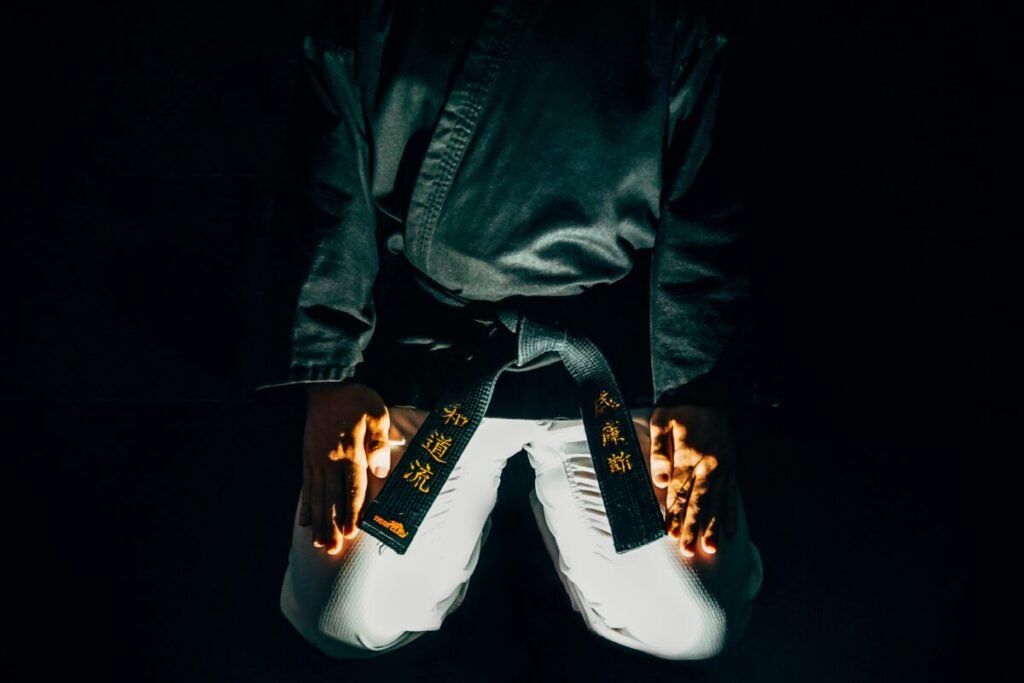

Last Tuesday, a white belt looked at me after class, sweating through his uniform, and asked if he could ever get good at Taekwondo just by practicing in his living room. I didn’t laugh. Thirty-two years ago, when I started my own path, I didn’t have a fancy gym; I had a patch of floor and a wall to hold onto for balance. If you are looking for the Best Home Drills for Taekwondo Beginners, you are already ahead of the pack. You don’t need a massive dojo or expensive equipment to sharpen your technique. You just need the floor beneath your feet and the willingness to move when no one is watching.
At Om’s Martial Arts & Fitness Studio, we see hundreds of students pass through our doors. Some want the intensity of our Kickboxing Training Jaipur sessions, while others come to us for Women Self Defense Classes Jaipur or Kids Fitness & Discipline Jaipur. But the ones who truly excel? They aren’t the ones who only show up for class. They are the ones who take the mechanics we teach and replicate them at home. I’ve made every mistake in the book, and I’ve watched thousands of students make them too. The biggest error is thinking that training stops the moment you walk out of our Best Martial Arts Academy Jaipur. It doesn’t.
You might think your living room is too small or your ceiling is too low. Forget that. Your space is your first dojang. We are going to strip away the fluff and focus on what actually moves the needle: your balance, your stance, and the snap of your kick. This isn’t about cardio; it is about precision. If you can’t hold a perfect chamber in your kitchen, you won’t be able to land a clean roundhouse in a tournament. We will break down how to build those muscle memories so that when you return to our Taekwondo Classes Jaipur, you aren’t just going through the motions—you are executing with intent.
Do you actually want to get faster, or do you just want to feel like you’re working hard? There is a massive difference. We are going to look at how to structure these drills to build real, functional strength without needing a single weight plate or heavy bag. I’ll show you how to identify your own flaws before a coach even has to point them out. Are you ready to stop pretending you are training and start actually doing the work? Let’s look at why your living room is the most important place you will ever train.
Why Your Living Room Is Your First Dojang
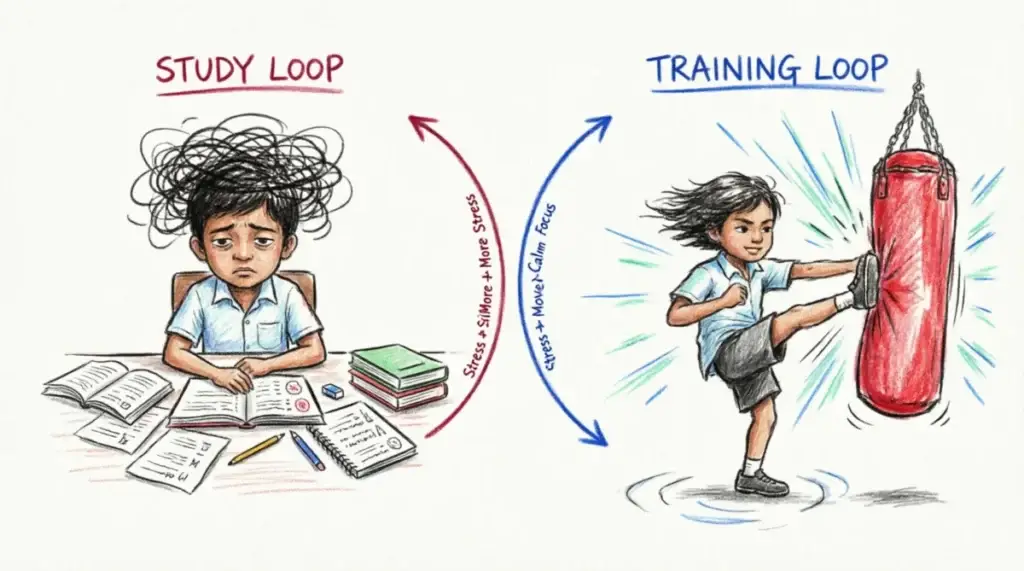
Last Tuesday, a white belt looked at me after class and complained that his progress stalled because he only trained twice a week at the studio. He thought he needed a massive hall and a heavy bag to get better. I laughed, then I told him the truth: his living room is the most important training ground he will ever own.
You do not need a rubberized floor or a wall of mirrors to become a technician. In fact, training in a cramped space forces you to be precise. If you swing your leg wildly, you hit the couch. If your stance is sloppy, you lose balance against the coffee table. You learn spatial awareness through necessity. When you lack space, you stop relying on power and start relying on clean, sharp movement. You learn to control your limbs because you have no other choice.
The Science of Showing Up
Motor skill retention requires consistency. Research suggests that you need at least three sessions a week just to keep your nervous system firing correctly. If you wait for the “perfect” time to train at the academy, you will lose the muscle memory you built during our sessions.
Think of your home environment as an extension of your mental state. As Dr. Danielle Roeske from Newport Healthcare suggests, our outer worlds affect our inner worlds. If your living room is cluttered, your mind is cluttered. Clear a small square of floor space tonight. When you physically organize your environment, you create a dedicated mental container for your discipline. That is not just housekeeping; that is preparing your brain for combat.
Clearing the Myth of Bad Habits
Many students fear they will develop “bad habits” if they practice alone without my eyes on them. This is an excuse, not a reality. Yes, you might make mistakes, but you will only get better at them if you do nothing. You gain more by drilling your basics in your living room—even imperfectly—than by doing nothing for five days while you wait for my correction.
I have trained over 25,000 students in my 32 years on the mat. I have seen the ones who practice solo at home pass the ones who only train in class every single time. They don’t just get stronger; they get resilient.
| Focus Area | The Living Room Advantage |
|---|---|
| Stance Work | Prevents wide, sloppy movements due to spatial limits. |
| Balance | Forced control makes you more stable on the mat. |
| Mental Discipline | Builds the habit of training when no one is watching. |
A Challenge for Your Next Session
Stop waiting for the perfect conditions. Martial arts is about discipline over motivation. You do not need a fancy gym to build a champion’s mindset. You need a floor, a bit of focus, and the resolve to show up for yourself.
I want you to test this tonight. Clear a space in your living room. Do not worry about power. Do not worry about speed. Just perform your basic kicks and blocks with absolute, controlled precision for ten minutes. If you hit a piece of furniture, you have moved too far. Adjust. Correct. Refine.
Are you willing to sacrifice ten minutes of your evening to prove to yourself that you are committed, or are you going to keep waiting for the perfect conditions that will never arrive?
The Foundation: Balance and Stance Mechanics
Last Tuesday, a white belt asked me why we spend so much time standing still in Joon-bi. He thought he was ready for high-flying spin kicks. I told him the truth: you cannot launch a rocket from a swamp. If your base is soft, your technique is just a guess.
You might think that standing still is the easy part of training. It isn’t. When you hold your stance, you are teaching your nervous system to map your body in space. This is proprioception. Without it, you are just throwing limbs around and hoping they hit something. When you train at home, stop rushing. Your legs need to learn how to lock into the floor like roots.
Building Stability Through Isometrics
You should aim for 30 to 45 seconds per hold to start. Don’t go for minutes at a time; you will just end up with sloppy form. Quality beats quantity every single time. I’ve trained over 25,000 students in Jaipur, and I still see black belts who forget that the supporting leg is the engine of the kick. If that leg wobbles, your power leaks out into the air.
Try these simple protocols to build that stability:
- Charyeot Hold: Stand tall, heels touching, toes at a 45-degree angle. Keep your weight evenly distributed across both feet, not just on your heels.
- Joon-bi Hold: Focus on your core. Keep your ribcage down. If your back arches, you are cheating your own muscles.
- Single-Leg Balance: Pick one knee up to waist height. Hold it. If you can’t hold it for 30 seconds without touching the floor, don’t worry about kicking yet. Build the house first.
The Stance Breakdown
| Stance | Focus Area | Common Mistake |
|---|---|---|
| Charyeot | Alignment | Leaning forward |
| Joon-bi | Core Engagement | Shallow breathing |
| Front Stance | Weight Distribution | Locked back knee |
Some coaches argue that static stances make you stiff or slow. I disagree. If you treat a stance as a dead end, sure, you become a statue. But if you treat your stance as a coiled spring, you become reactive. You aren’t “frozen” in a stance; you are “loaded.”
Watch yourself in a mirror. Move into your front stance in slow motion. I mean agonizingly slow. If you see your head bob up and down, you are losing your center. Your head should move in a straight, level line, like it’s sliding along a rail. If your head dips or rises, your legs are doing too much work and not enough stabilizing.
I used to rush my own practice when I was a teenager. I wanted the speed. I wanted the flashy moves. But I spent years fixing the leaks in my foundation because I didn’t respect the stance. Don’t make my mistake. Take the extra ten minutes tonight to hold your positions until your legs burn. If you don’t feel that heat, you aren’t working hard enough.
Can you hold your Joon-bi for one full minute tonight without your focus drifting to the clock?
Snap and Recoil: Perfecting the Front and Roundhouse Kick
Last Tuesday, a white belt looked at me after class, frustrated that his roundhouse kick felt like a wet noodle. He was snapping his leg out with all his might, yet the target barely moved. I stopped him right there. You see, he was obsessed with the snap. He treated the kick like a whip, forgetting that a whip only stings; it doesn’t break. If you focus only on the extension, you lose the penetration. A kick without a solid core behind it is just a flick.
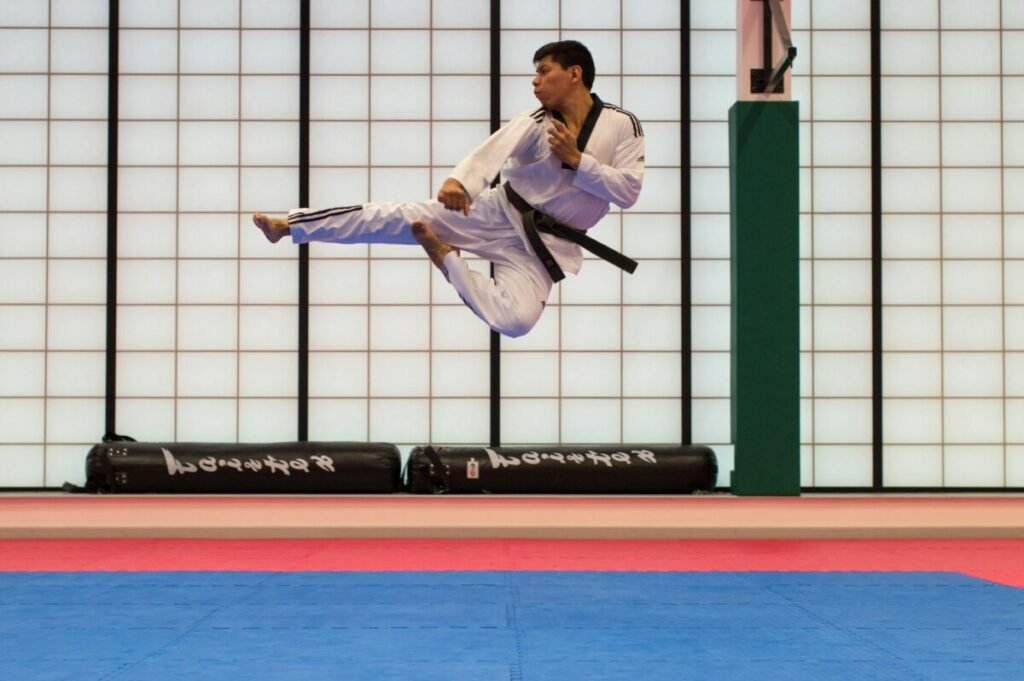
Think of your leg as a spring. If you pull it back fully, the release is explosive. That chamber is your potential energy. When you skip the chamber, you aren’t kicking; you’re just flailing. I’ve spent 32 years on these mats in Jaipur, and I still see black belts get lazy with their recoil. They extend, then let their leg drop like a lead weight. That is a mistake. You want that foot back in the chamber position just as fast as it left. Science tells us that nearly 40% of a kick’s perceived power actually comes from the speed of the recoil. If you leave your leg dangling, you aren’t just slow; you’re vulnerable.
The Wall-Chamber Drill
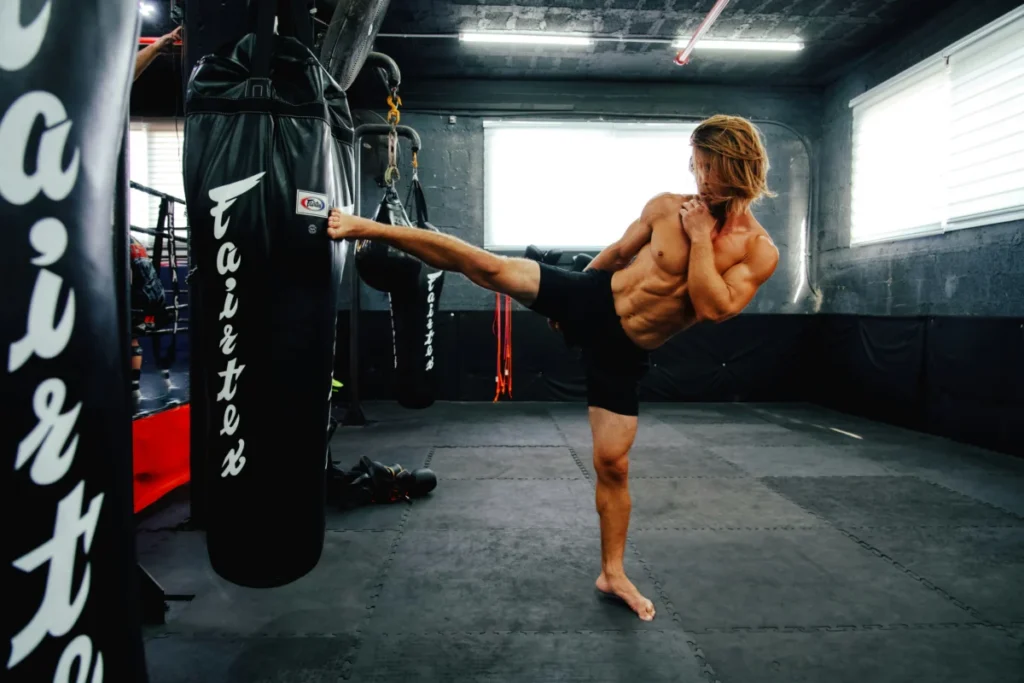
You don’t need fancy equipment to fix this. Grab a sturdy chair or stand next to a wall. Use it for balance, not as a crutch. Place your hand on the wall to stabilize your torso. Now, lift your knee into a high chamber for a front kick. Hold it. Count to three. Snap it out, then pull it back to that exact same height before setting your foot down.
| Phase | Common Mistake | The Fix |
|---|---|---|
| Chamber | Knee pointing down | Drive knee toward your chest |
| Snap | Locking the knee early | Push through the target |
| Recoil | Dropping the leg | Pull back to chamber fast |
Why the wall? It keeps you honest. If you are leaning back or dropping your knee, you’ll feel it instantly. A vertical chamber is superior because the path of your foot is shorter. It’s faster, and more importantly, it hides your intention. If your opponent can’t tell if you’re throwing a front kick or a roundhouse until the very last millisecond, you have already won the exchange.
I’ve made the mistake of rushing the technique to look fast. We all do. We want to see the foot hit the target. But I promise you, if you slow down and force your leg to return to the chamber with control, your speed will eventually double. It’s not about how hard you can flick your shin; it’s about the structural integrity you maintain throughout the movement. Discipline over motivation—that is our mantra at Om’s. You don’t need to be “in the mood” to train. You just need to show up and hold that chamber for ten seconds longer than you want to.
Stop worrying about the sound of the snap. Focus on the geometry of your movement. Are you pulling your heel to your glute? Is your standing foot pivoting enough to open your hip?
Try this tonight: stand in front of a wall and perform twenty slow-motion roundhouse kicks. Every single time, touch your heel to your glute during the recoil phase. If you can’t do it without losing your balance, why are you trying to kick at full speed? Can you master the slow version before you demand the fast one from your body?
Integrating Conditioning: Strength Meets Technique
Last Tuesday, a student with a bright orange belt asked me if he should start lifting heavy weights at the local gym to get his roundhouse kicks above his opponent’s shoulder. I laughed, then I pulled him aside. I told him the same thing I’ve told thousands of students over my 32 years on the mat: if you build bulky, static muscle without training it to move, you’re just building a cage for your own legs.
Many beginners fall into the trap of thinking hypertrophy is the goal. They want the big quads from a bodybuilding magazine. But look at the best kickers in the world—they are lean, efficient, and explosive. If you focus solely on size, you lose the fluid elasticity required for a high kick. Your hip flexors need to be strong, yes, but they also need to be supple. If they are tight and locked up from heavy, slow reps, your kicks will hit like a sack of potatoes rather than a whip.
Building Explosive Power
You want speed? You need plyometrics. When you pair a technical drill with an explosive movement, you teach your nervous system to fire immediately. Think of it as bridging the gap between your brain and your muscles.
Try this simple circuit at home tonight. Do not skip the chamber holds; those are where you build the structural integrity for your balance.
- 10 Jump Squats: Focus on soft landings.
- 30-second Roundhouse Chamber Hold: Keep your knee high and your standing foot turned out.
- 10 Lateral Bounds: Push off your outside leg to mimic the rotation of a kick.
- 30-second Roundhouse Chamber Hold: Repeat on the other leg.
Perform this cycle four times. By the end, your hips will burn, but that burn is the feeling of progress. It is the feeling of your body learning to stabilize under fatigue.
The Mechanics of the Kick
Rotation is everything. If you watch the experts, you see that the power for a roundhouse kick does not actually start in the leg. It starts in the core and the rotation of the standing hip. If your core is weak, your torso leaks energy before it ever reaches your foot. You need functional strength that prioritizes rotational torque.
| Exercise | Primary Focus | Benefit for Kicking |
|---|---|---|
| Russian Twists | Oblique engagement | Faster hip turnover |
| Single-leg Deadlifts | Glute stability | Better balance on impact |
| Mountain Climbers | Dynamic hip flexion | Speed of the chamber |
I remember early in my training, I obsessed over how hard I could hit a heavy bag. I ignored my core stability for months. I ended up with a nagging lower back injury that kept me off the mat for weeks. Don’t be me. Don’t chase the power until you have mastered the control.
Your hip flexor strength is the direct limiting factor for your kick height. If you cannot pull your knee to your chest while standing, you will never reach your opponent’s head without dropping your guard or losing your balance.
Are you actually pushing your limits during these chamber holds, or are you just waiting for the timer to beep? Next time you practice, hold that chamber for five seconds longer than you think you can. That extra five seconds is where the real martial artist is forged. Will you show up for yourself, or will you settle for “good enough”?
Safety and Skill: A Quick Comparison of Training Methods
Last Tuesday, a white belt pulled me aside after class, frustrated that his shin felt like it had been scraped by a cheese grater after practicing roundhouse kicks on his living room rug. I looked at him and reminded him of what I tell every student: your floor is not a tatami mat. If you treat your hardwood or carpet like a professional dojo, you will pay the price in skin and joint pain.
In my 32 years of training over 25,000 students here in Jaipur, I have seen too many preventable injuries. Beginners often treat home training as a casual affair, but your body doesn’t know the difference between a “real” session and a “home” session. When you practice without the proper base, you put stress on your ankles and knees that they simply aren’t ready for.
The Reality of Home Hazards
If you are training at home, stop assuming your environment is neutral. Hardwood floors are unforgiving, and thick carpets invite twisted ankles. If you don’t have mats, you must adjust your intensity. Don’t go for 100% power on a kick if you have no friction under your feet.
Think about your posture. When I see a student struggling with balance, I often place my index finger between their shoulder blades and tell them to squeeze as if holding a pencil. It forces the core to engage. Without that core stability, your base becomes weak, and your joints take the full impact of every movement.
| Environment | Primary Risk | Fix |
|---|---|---|
| Hardwood/Tile | Floor burns & joint impact | Wear thin grip socks or soft-sole shoes |
| Carpet | Twisted ankles/lack of pivot | Clear a 6×6 foot area; use a yoga mat |
| Concrete | High-impact joint damage | Avoid entirely; practice slow-motion form only |
The Camera Trap
Many of you record your sessions on your phones, thinking it’s the best way to copy my form. It can be, but it often leads to what I call the “mirror trap.” You spend forty minutes obsessing over how your leg looks in the frame, trying to make it look like a movie star’s kick, while your actual balance is falling apart. You become obsessed with the aesthetic rather than the function.
Record yourself for two minutes, then stop. Watch it once. Look for the technical failure—is your shoulder back and down? Are your feet pointed like you are standing on skis? Then put the phone away and do the work. Don’t let the screen become your coach. I am your coach. The screen is just a mirror that doesn’t talk back.
Your Pre-Training Safety Checklist
Before you start your next session, look at your space. If you wouldn’t let your grandmother walk through it, don’t try to kick in it.
- Check for loose rugs or cables that could trip you.
- Ensure your arms have full extension clearance from walls and furniture.
- Verify your grip: if you slide when you pivot, you are going to hurt your knee.
- Clear the floor of any sharp debris that could cause a skin tear.
I’ve made my share of mistakes. I once tried to practice spinning hook kicks in a room with a low ceiling and a ceiling fan. Let’s just say the fan won. Learn from my stupidity. Do you really need to be in the center of the living room, or can you move the coffee table to the wall? What is one thing you can change in your training space tonight to ensure you’re moving with discipline rather than just hoping you don’t get hurt?
Final Thoughts
Last Tuesday, a student looked at me after a grueling session and asked if he really needed to practice his balance while brushing his teeth. I laughed, but I told him the truth: the black belts you see on my floor didn’t get there by training only when they felt like it. They got there because they turned every square inch of their homes into an extension of the dojang. When you stop waiting for the “perfect” time to train and start using the ten minutes you have between tasks, that is when you stop being a beginner and start becoming a martial artist.
I have spent 32 years on the mat, and I still catch myself making rookie mistakes when I get lazy with my fundamentals. If I can still trip over my own feet by neglecting my stance, you certainly aren’t above practicing your basics in your living room. You don’t need fancy pads or a high-tech gym to build explosive power. You need sweat, repetition, and the honesty to tell yourself when your form is sloppy. Do you want to reach that next belt level? Then stop looking for shortcuts and start trusting the process.
Keep these priorities at the front of your mind every time you clear a space on your floor to train:
- Own your stance: If you cannot hold a static position for thirty seconds without wobbling, your kicks will never have the power or speed you want.
- Master the recoil: The kick is only half the movement; pulling your leg back with control is what keeps you safe and ready for the next strike.
- Prioritize consistency: Ten minutes of focused, daily practice beats a two-hour session once a week every single time.
At Om’s Martial Arts & Fitness Studio, we see this discipline break down barriers for thousands of students in Jaipur. We are here to guide you when your home practice hits a wall or when you need a professional eye to correct that persistent habit in your roundhouse. Don’t let your training stop at the door of your house. Take these drills, commit to them tonight, and see what happens when you treat your own discipline as your greatest tool.
Are you ready to stop wishing for results and start working for them? Clear your space tonight, find your balance, and throw your first ten kicks with full focus. We will be waiting for you on the mat to help you reach that next level of strength and character.
You Might Also Like
→

→
→

→

→