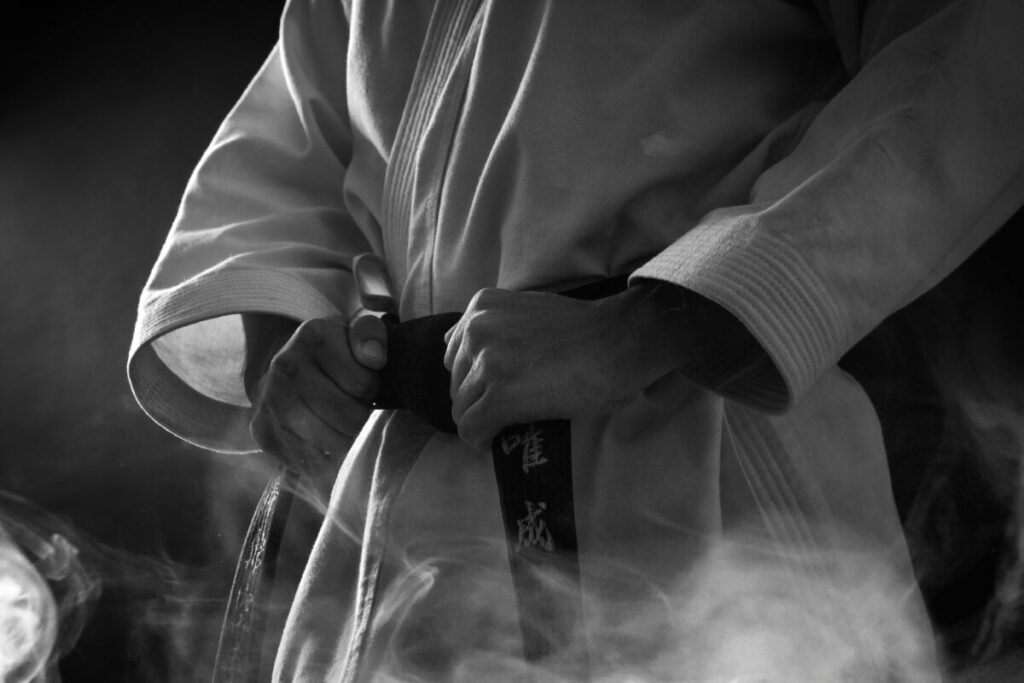

Last Tuesday, a white belt looked at me after class, sweat dripping down his forehead, and asked if he could get better by just training at home twice a week. I laughed, but I didn’t mean to mock him. I was remembering my own early days, thinking that a few extra kicks in my living room would make me a world champion overnight. The truth? You don’t need a fancy gym or expensive gear to change your life. You need to show up when no one is watching. If you want to make progress, you have to realize that Om’s Martial Arts & Fitness Studio isn’t just a place you visit; it’s a standard you carry with you. Whether you are looking for Taekwondo classes Jaipur or just want to sharpen your focus, your real training starts the moment you walk through your own front door.
I have coached over 25,000 students in my 32 years on the mat, and I can spot a student who practices at home from a mile away. They have better balance, sharper eyes, and a quiet confidence that only comes from repetition. You might think you need a heavy bag or a partner to get a real workout. You are wrong. You have gravity, you have floor space, and you have a body that is capable of incredible things if you stop making excuses. I am going to show you exactly how to turn your living room into a training ground. We will break down how to stop waiting for that elusive spark of motivation, how to lock in your stance until it feels like home, and how to build explosive speed through shadow kicking. You will also learn how to build real, functional strength without paying for a weight management gym Jaipur membership you never use.
I see parents struggling to find kids fitness & discipline Jaipur programs that actually stick, and I see adults wanting to join our MMA academy Jaipur or kickboxing training Jaipur sessions but feeling too intimidated to start. Forget the intimidation. If you can stand, you can train. If you have five minutes, you have a session. I made every mistake in the book when I started, training until I burned out because I didn’t understand the balance of discipline and recovery. I don’t want you to waste time doing drills that don’t work. Are you ready to stop treating your training like a hobby and start treating it like a discipline? Let’s talk about how to build a habit that actually lasts, starting with the one thing most beginners completely ignore.
Stop Waiting for Motivation: Building the Martial Arts Habit
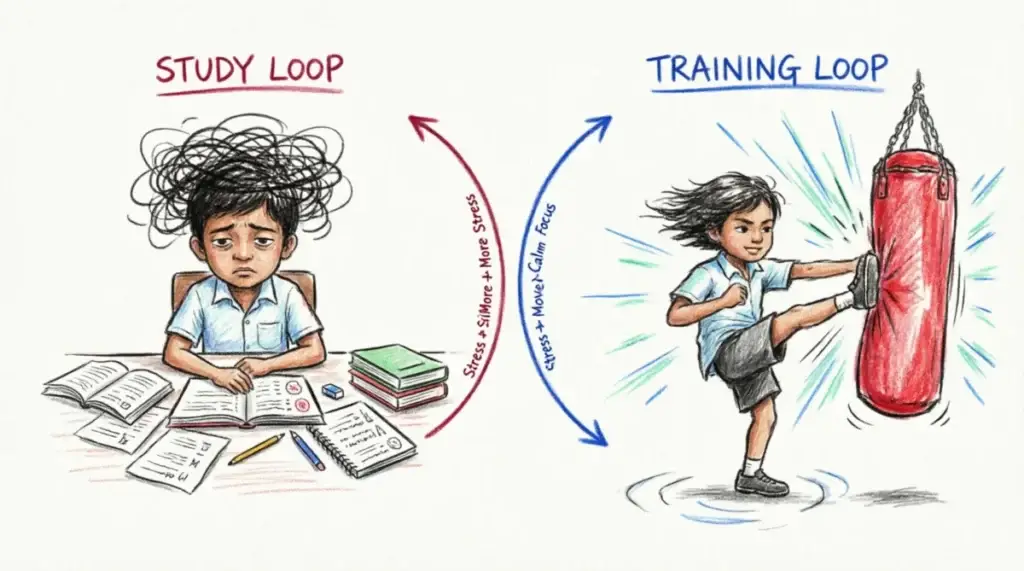
Last Tuesday, a white belt pulled me aside after class. He looked exhausted, frustrated, and honestly, a bit defeated. He told me, “Om Sir, I just don’t have the motivation to practice at home after work. My legs feel heavy, and I feel like I’m not making progress.” I smiled because I’ve heard that exact sentence thousands of times over the last thirty-two years. My answer surprised him: stop looking for motivation. Motivation is a fair-weather friend. It shows up when you feel great and vanishes the moment you’re tired or stressed.
Discipline, however, is a professional. It doesn’t care if you feel like training. It just shows up.
Many students believe they need a two-hour block of time to make progress. They think that unless they are sweating through their uniform for an hour, they aren’t actually training. This is a trap. Science on habit formation, popularized by researchers like James Clear, suggests that the brain builds new neural pathways more effectively through repetition than through sheer intensity. You don’t need two hours on a Saturday. You need ten minutes on a Tuesday, a Wednesday, and a Thursday.
The Power of Micro-Dosing Your Training
Think of your Taekwondo skill like a bank account. You cannot save for retirement by putting away a massive lump sum once a year. You save by making small, consistent deposits. When you practice your chambering or your front kick for ten minutes daily, you are depositing skill into your muscle memory.
If you wait for the “perfect” time to train, you will never train. Use the Two-Minute Rule. Tell yourself you will only practice your Poomsae for two minutes. That is it. Put on your belt, stand in your living room, and perform the pattern twice. Usually, once you start, the resistance to the activity disappears. You will likely stay for ten or fifteen minutes. But even if you stop at two, you have successfully reinforced the identity of a martial artist. You showed up.
| Strategy | Why It Works |
|---|---|
| Habit Stacking | Attach your kicks to an existing habit (e.g., kicking while the coffee brews). |
| The 10-Minute Micro-Dose | Prevents burnout and keeps movements fresh in the mind. |
| Environmental Design | Leave your belt or training gear where you see it first thing in the morning. |
Debunking the Intensity Myth
Some people pride themselves on “going hard” once a week. They hit the heavy bag until their knuckles bruise, then disappear for six days. This is ego, not training. In my thirty-two years of teaching over 25,000 students here in Jaipur, the ones who reach black belt are rarely the ones who train with reckless intensity for short bursts. They are the ones who treat their practice like brushing their teeth. It is non-negotiable.
If you want to move past the beginner plateau, you must stop viewing martial arts as an event you attend and start viewing it as an identity you inhabit. You aren’t “doing” Taekwondo; you are a martial artist. Martial artists practice. It is just what they do.
I want you to try this tonight: don’t worry about the perfect roundhouse kick. Don’t worry about your flexibility. Just set a timer for five minutes before you go to bed. Stretch your hamstrings or hold a front stance while you watch the news. Do it for one week. Do you think you can handle five minutes of discipline, or are you still waiting for the motivation to strike?
Foundation First: Mastering the Perfect Stance
Last Tuesday, a white belt looked at me after class, sweating through his uniform, and asked why I made him hold a front stance for three minutes straight. He thought I was just being difficult. I told him the truth: you aren’t fighting the floor; you’re fighting your own structural collapse. If your base is weak, your kick is just a limb flailing in the air. Over my 32 years on the mat, I’ve watched thousands of students try to skip the basics to get to the flashy spinning kicks. They always hit a wall. Usually, that wall is an injury or a complete lack of power.
Think about your ap kubi, the front stance. It isn’t just a pose. It is a biomechanical engine. When your hips are misaligned, you lose nearly 40% of your potential power because the kinetic chain breaks at the pelvis. You cannot transfer force from the ground up if your hips are tilted or your knees are caving inward. That energy just leaks out. Many beginners argue that they want to move “naturally,” as if rigid structure is the enemy of speed. That is a dangerous myth. If you don’t build a rigid, stable frame first, you aren’t moving naturally; you are moving chaotically. Chaos leads to torn ligaments and strained lower backs. Physical therapists often talk about the importance of pressing the feet into the floor to create equal and opposite energy, and they are spot on. If you don’t have that tension, you have nothing.
The Tape-Line Drill
Don’t guess where your feet go. Use a piece of masking tape on your floor. Create a line that defines your width and length. Place your front heel on the line and your back foot at a 30-degree angle. If your feet are too narrow, you will wobble like a top. If they are too wide, you will be too slow to transition into your next movement. Spend ten minutes a day holding this position while watching yourself in a mirror. Watch for the ‘hidden’ mistakes:
- The front knee drifting inward (a classic recipe for ACL stress).
- The back heel popping off the floor (you lose your ground connection instantly).
- The upper body leaning forward to cheat the depth (this creates massive strain on your lumbar spine).
Here is a quick look at how your body should feel during these drills:
| Body Part | Checklist | Coach’s Tip |
|---|---|---|
| Front Knee | Aligned over the ankle | Can you see your big toe inside your knee? If not, push it out. |
| Hips | Square to the front | Imagine a headlight on each hip bone; they should point forward. |
| Back Leg | Fully locked and engaged | Squeeze your glute. It protects your lower back. |
I remember my own early training. I hated the monotony of stance work. I wanted to move. But my instructor, who had seen it all, would just point to my foot and say, “Fix the root, and the fruit will follow.” He was right. If you want to stop getting injured, you have to stop treating your stance like a suggestion. It is a demand. Try this tonight: perform a wall-sit for sixty seconds, but imagine you are in a front stance. Keep your spine long, as if a string is pulling the crown of your head toward the ceiling. Feel the heat in your quads? That’s not just fatigue; that’s the feeling of your body finally learning how to stabilize itself.
Are you willing to spend five minutes tonight staring at your feet to ensure they are anchored correctly, or would you rather keep guessing and hope your knees hold up?
Speed and Precision: Shadow Kicking Techniques
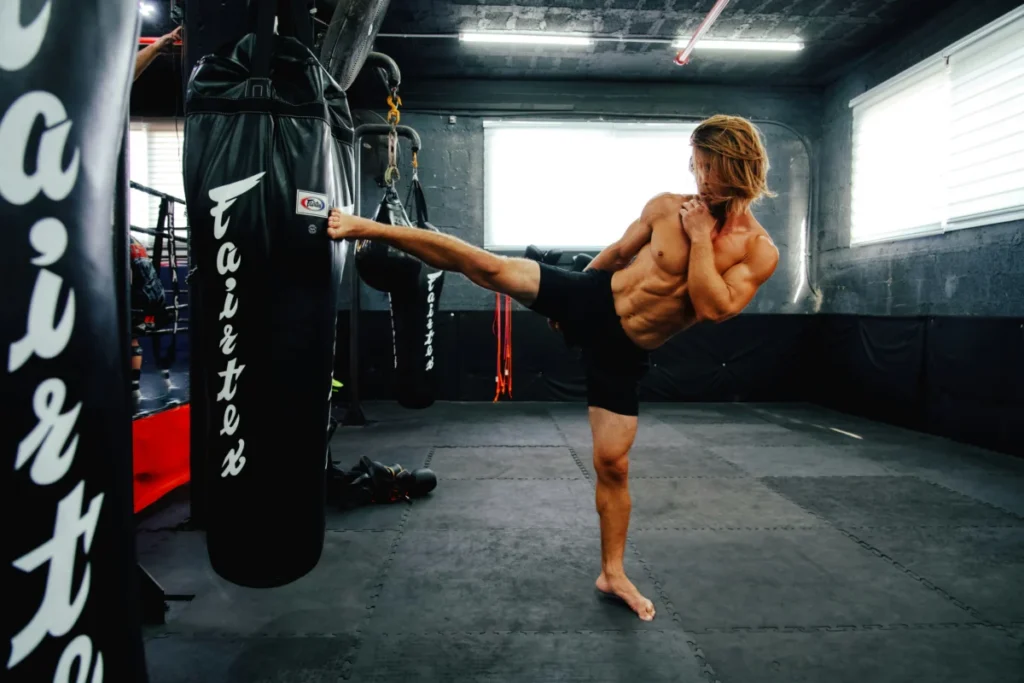
Last Tuesday, a white belt told me he felt like a hero when he kicked the heavy bag, but felt like a newborn giraffe the moment he tried to kick the air. He was right. That is exactly where most students fall apart. They rely on the bag to catch their foot, so when they shadow kick, they lose their balance, over-rotate, and look like they are fighting an invisible gale-force wind.
If you cannot kick the air with precision, you do not own the technique. You are just borrowing it from the equipment.
The Slow-Motion Secret
I spent years training athletes who wanted to kick fast, but they all made the same mistake: they moved fast before they knew where their limbs were. In my 32 years on the mat, I have seen 25,000 students struggle with this. If you want speed, you must start in slow motion.
When you move at 25% of your actual speed, your brain stops guessing and starts programming. You force your nervous system to map the exact trajectory of your chamber, the extension, and the retraction. It is neurological motor programming. If you rush, you are just practicing sloppy habits.
Try the ‘slow-mo’ chamber drill tonight. Set a timer for three minutes. Perform your roundhouse kick so slowly that you could freeze at any point in the arc without wobbling. If you wobble, your standing leg is not doing its job.
Stabilizing the Standing Leg
Your standing leg is your anchor. If that foot shifts, you lose all your potential power. I call this the tripod balance. Think of your standing foot as having three points of contact: the ball of the foot, the heel, and the outside edge.
| Focus Area | Why It Matters |
|---|---|
| Vestibular Balance | Keeps your inner ear aligned so you don’t get dizzy. |
| Core Engagement | Prevents your torso from leaning too far away from the target. |
| Visual Lock | Your eyes guide your hips; where you look, your kick follows. |
Stop looking at the floor. If you stare at your feet, your body will fold toward them. Pick a spot on the wall—a specific crack in the paint or a piece of tape—and glue your eyes to it. That visual focus is not just for accuracy; it is a signal to your brain to stabilize the entire kinetic chain.
The Myth of Empty Power
Here is the tough love: shadow kicking without a target is dangerous. If you simply throw kicks into the void, you develop ’empty’ power. Your brain gets used to the leg extending fully without hitting resistance, which leads to hyperextension and weak joints.
You must visualize an opponent. Not a generic shadow, but a specific threat. Imagine their height, their reach, and their guard. If you aren’t imagining them checking your kick, you aren’t training; you’re just dancing.
In my early years, I thought I was fast because I could kick the air ten times in five seconds. Then I stepped into a real sparring match and realized my kicks had no ‘stop.’ I was overshooting every target because I never practiced the retraction.
Do you want to be a dancer or a fighter? If you want to be a fighter, stop treating the air like it is empty. Treat the air like it is a person who is about to hit you back.
Can you commit to doing fifty slow-motion kicks today without letting your standing heel touch the ground? Let’s see if you can hold your focus longer than your fatigue.
The Truth About Conditioning: Strength Without the Gym
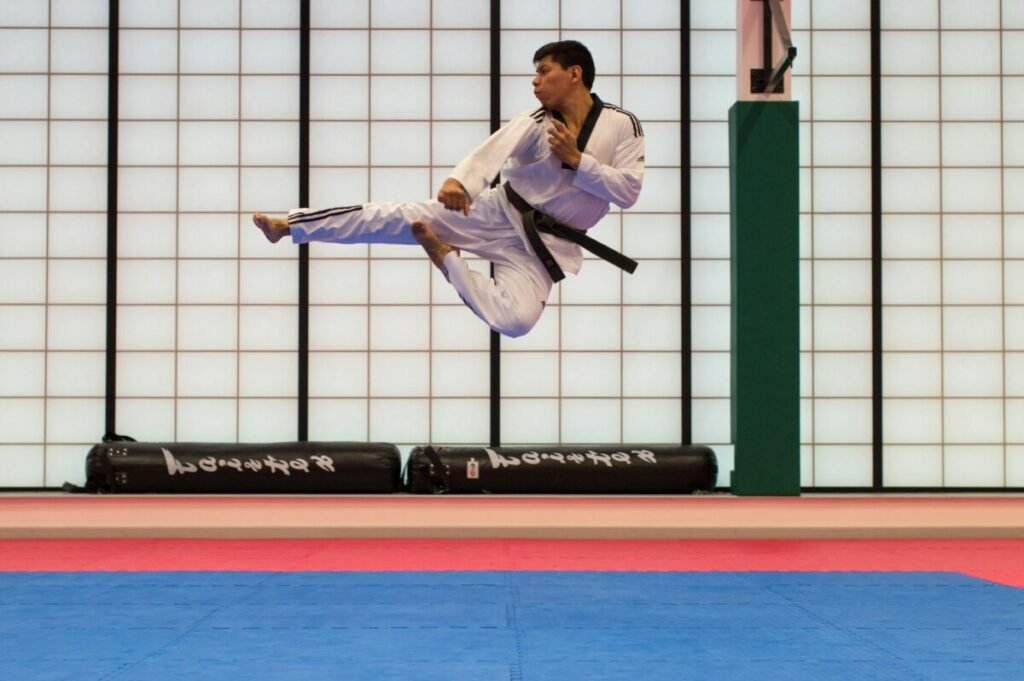
Last Tuesday, a white belt asked me if he needed to join a commercial gym to add power to his roundhouse kick. He looked at the heavy iron plates in the corner of my studio and thought that was the only way to build speed. I told him the truth: you don’t need a gym membership to develop the explosiveness of an elite kicker. In my 32 years on the mat, I have watched students chase heavy weights only to grow stiff and slow. Taekwondo is about kinetic energy, not how much you can bench press.
True power starts in your core and radiates through the posterior chain. If your glute medius is weak, your kicks will lack the snap they need at the point of impact. You don’t need a rack of dumbbells to fix this. You need to master your own frame.
Why Bodyweight Beats Barbell for Speed
Many people think external resistance is the only way to build muscle. That is a myth. When you use your body weight for plyometrics, you train your nervous system to fire rapidly. You are teaching your muscles to coordinate under pressure. Heavy lifting has its place, but for Taekwondo, the ability to snap your leg out and back in a fraction of a second comes from explosive calisthenics.
Look at the difference in training focus for our sport:
| Movement Goal | Preferred Method | Why? |
|---|---|---|
| Explosive Speed | Plyometric Calisthenics | Encourages fast-twitch muscle fiber recruitment. |
| Core Stability | Isometric Holds | Teaches the body to resist rotation during a kick. |
| Max Strength | Weighted Training | Builds density, but can reduce flexibility if overdone. |
Building the Engine at Home
If you want a stronger kick, stop worrying about machines. Start with the Turkish Get-Up. It is a brilliant, grueling way to stabilize your core without ever touching a plate. You lie on your back, extend one arm toward the ceiling, and stand up while keeping your eyes on your hand. It forces your obliques and shoulders to work in harmony. If you can’t do it smoothly without weight, you aren’t ready to add it.
After you master the movement, focus on your hip flexors. Tight, weak hips are the primary reason students struggle to hold their chambers. Try this routine three times a week:
- Slow-motion side kicks: Hold the extension for five seconds.
- Glute bridges: Squeeze at the top, focusing on the glute medius.
- Jump squats: Focus on a soft landing to protect your knees while building bounce.
I’ve seen students spend hours in the gym, only to come back to the studio slower than when they started. They sacrificed their range of motion for bulk. Do not make that mistake. Consistency is your best tool. You can combine calisthenics and weight training, but if you have to choose, choose the method that keeps you fast.
You have enough power in your own limbs to shatter boards and score points—if you have the discipline to train them properly. Are you willing to spend twenty minutes tonight mastering the Turkish Get-Up, or are you still looking for a shortcut that doesn’t exist?
Comparing Home Drills vs Academy Training
Last Tuesday, a student asked me why he couldn’t just master his side kick by watching YouTube videos in his living room. He had been practicing for weeks, yet his balance was still shaky. I looked him in the eye and told him the truth: a mirror can show you what you look like, but it cannot tell you why your hip alignment is failing.
You see, the biggest trap in solo training is the feedback loop gap. When you train alone, you are both the student and the teacher. If you lack the base knowledge, you end up teaching yourself the wrong habits. I have spent over 32 years on the mat, and I still have my senior instructors critique my form. If I need eyes on me, you certainly do.
The Reality of Solo Training
Does this mean you should stop your home drills? Absolutely not. Think of home training as your laboratory and the academy as your classroom. You use the lab to build muscle memory and conditioning, but you come to the academy to refine the mechanics. When you rely solely on home practice, you miss the real-time correction that prevents bad habits from becoming permanent.
| Feature | Home Drill Environment | Academy Training |
|---|---|---|
| Feedback | Self-Correction (Often flawed) | Instant Professional Correction |
| Intensity | Variable/Personalized | High/Peer-driven |
| Focus | Repetition | Application and Strategy |
Bridging the Gap
I have seen students accelerate their progression by using video analysis. If you record yourself performing a drill and send it to your instructor—or compare it side-by-side with a master’s movement—you create a synthetic feedback loop. It isn’t as good as being in my studio in Jaipur, but it beats training in a vacuum.
Consider the case of Rohit, one of my students who needed to level up before a grading. He felt stuck on his poomsae. He spent twenty minutes every morning performing the motions in his living room while filming himself. He then sent those clips to our coaching team. By the time he stepped onto the mat for his actual class, he had already fixed the technical errors that would have held him back for another month. He tested out of his beginner level in half the usual time because he treated his home time as a direct extension of our academy philosophy: discipline over motivation.
Debunking the “Bad Habit” Myth
People often worry that home training will ruin their technique. This is only true if you train without a plan. If you practice a sloppy kick a thousand times, you aren’t training; you are just cementing a mistake. However, if you use home drills to sharpen the specific tasks I give you at the end of class, you are effectively doubling your training volume.
The danger isn’t the solo training itself. The danger is the ego that assumes you don’t need a master’s eye. Even after training 25,000 students, I know that my own perspective is limited. I require my peers to watch me because I cannot see my own blind spots. Why would you think you are any different?
Stop trying to reinvent the wheel in your living room. Use your home time to build the engine—your strength, your stamina, and your repetition—but bring that engine to me so we can tune it.
What is the one move you feel most frustrated with right now, and how many times did you actually practice it with focus this week? Don’t tell me you’re busy; tell me you’re committed.
Final Thoughts
Last Tuesday, a white belt looked at me after a grueling session and asked if practicing at home would really make him a black belt faster. I laughed, but I didn’t sugarcoat it. I told him that if he only trains when he feels like it, he’s just a hobbyist. If he treats his living room floor like the dojo mats at Om’s Martial Arts & Fitness Studio, he’s a martial artist. I made the same mistake when I started; I thought intensity in the gym excused laziness at home. I was wrong. The real growth happens in the quiet moments between classes, where nobody is watching and your legs are burning.
You have the blueprint now. You know that a strong stance is the difference between a fighter and a falling tree. You know that shadow kicking isn’t just waving your legs in the air—it is a study of balance and intention. But knowledge is dead weight if you don’t move your feet. Do you want to be the person who talks about training, or the person who actually trains?
- Consistency beats intensity: Ten minutes of daily, focused drilling is worth more than one two-hour session once a week.
- Control the foundation: If your stance is sloppy, your power is non-existent. Fix your base before you try to throw high kicks.
- Own your space: You don’t need a gym, expensive pads, or a partner to get better. You only need a sliver of floor and the discipline to use it.
Stop waiting for the perfect conditions. There is no perfect time to start. Clear a space in your room tonight. Do fifty perfect front kicks while holding onto a chair for balance. Then, do fifty more without it. When your legs shake, that is when the real training begins. If you find yourself struggling with the technical details or if you feel like your progress has hit a wall, come see me at Om’s Martial Arts & Fitness Studio here in Jaipur. I have spent thirty-two years teaching people how to move, and I have yet to meet someone who couldn’t improve with a bit of honest feedback.
The mat is waiting for you, whether it is in your living room or at our academy. How many repetitions are you going to commit to before the sun comes up tomorrow? I expect to see that improvement in your next class. Keep your head up, keep your guard tight, and keep showing up. We have a lot of work to do, and I am ready when you are.
You Might Also Like
→

→
→

→

→