
What Is Taekwondo?
Taekwondo (태권도) is far more than just a Korean martial art; it is a systematic method of physical and mental refinement. The name literally translates to “the way of the foot and fist,” but anyone who has spent time on our mats knows that the true power lies in the mind. With over 80 million practitioners worldwide and a permanent home in the Olympic Games since Sydney 2000, Taekwondo has evolved into a global language of movement.
At our studio, we focus on the World Taekwondo (WT) style. This is the version you see on the Olympic stage—fast, dynamic, and highly technical. Unlike arts that rely on grappling or ground fighting, we emphasize:
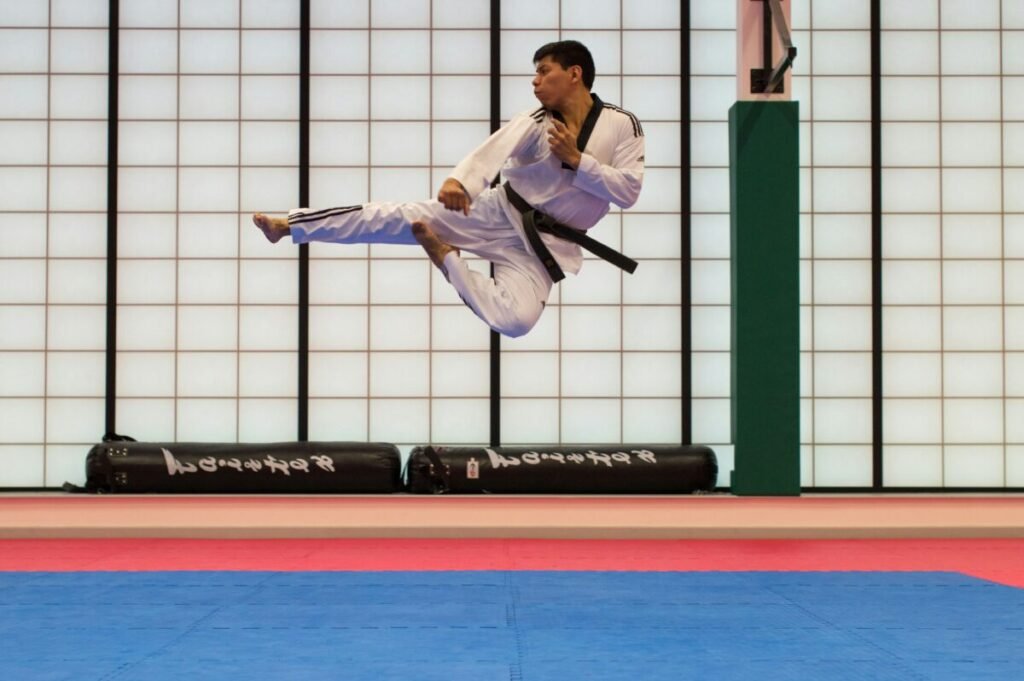
- Explosive Kicking: Using the legs, which are the longest and strongest weapons in the body, to deliver strikes with incredible speed.
- Strategic Footwork: Mastering distance and timing so you can strike without being struck.
- Mental Clarity: Developing the ability to remain calm under the pressure of a sparring match or a life-threatening situation.
Om Sir, with over 32 years of experience, often reminds our students that a high kick is impressive, but the discipline required to train every day is what actually changes a person’s life. We don’t just teach you how to fight; we teach you how to control your environment and yourself.
A Brief History of Taekwondo
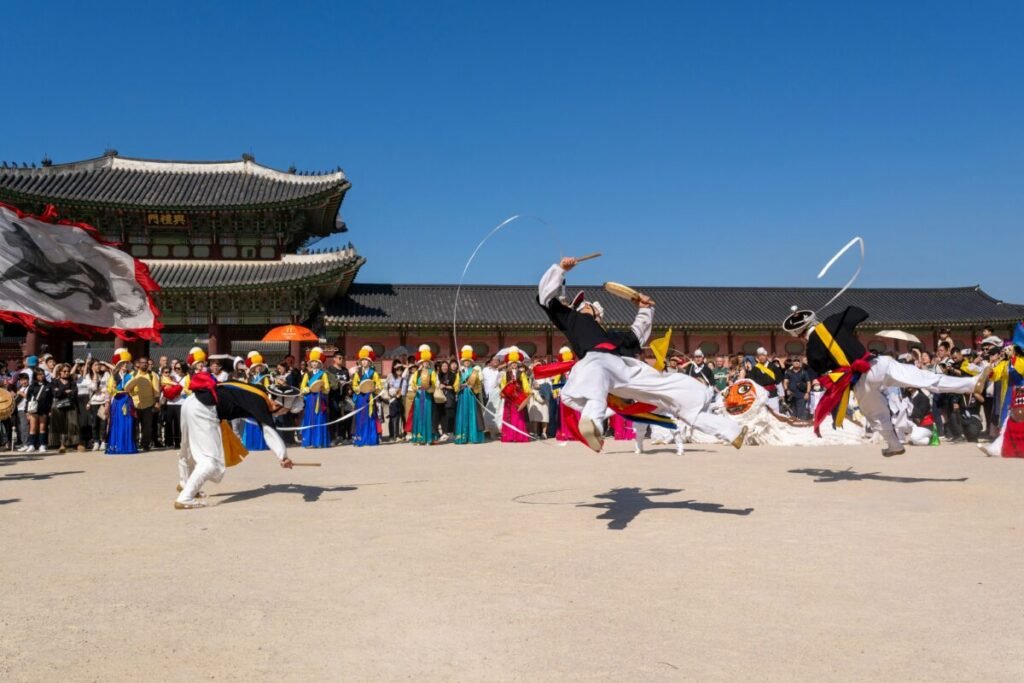
Taekwondo’s roots are deeply embedded in the history of Korea. During the Three Kingdoms period, the Hwarang warriors—an elite group of youth—used a combat system known as Subak. They weren’t just soldiers; they were scholars of philosophy, ethics, and physical prowess. This historical connection is why we emphasize character development alongside physical technique.
The 20th century, however, brought significant challenges. During the Japanese occupation of Korea, martial arts were suppressed. Many pioneers had to practice in secret or travel abroad to learn other systems, which explains the technical overlap we see today with Karate. It wasn’t until 1955 that a committee of masters unified the various “kwans” (schools) under the name Taekwondo. General Choi Hong Hi played a primary role in this, though the sport eventually split into two distinct paths: the ITF (International Taekwondo Federation) and the WT (World Taekwondo). We align with WT because it offers the most rigorous, internationally recognized competitive pathway for our students in India.
The Five Tenets of Taekwondo
We treat the five tenets not as abstract concepts, but as daily practice:
- Courtesy (Ye Ui): This is the foundation. If you cannot respect your training partner, you cannot learn from them.
- Integrity (Yom Chi): We value honesty in training. If you skip a repetition, you are only cheating yourself.
- Perseverance (In Nae): The path to a black belt is long. Most people quit when the novelty wears off; the champion persists.
- Self-Control (Geuk Gi): This is the hallmark of a true martial artist. It is easy to be aggressive, but it takes immense strength to hold back your power when necessary.
- Indomitable Spirit (Baekjul Boolgool): This is the “never give up” mentality. Whether you are facing a tough opponent or a difficult challenge at school or work, this spirit carries you through.
Taekwondo Techniques – An Overview
Technique is the language of Taekwondo. Beginners often want to jump straight to spinning kicks, but we prioritize the foundation. A powerful kick is useless if you don’t have the stance to support it. We spend weeks ensuring your “Ap Kubi” (front stance) is stable before we ever ask you to throw a high roundhouse kick.
Our hand techniques are often overlooked by outsiders, but they are vital for close-quarter situations. From the basic “Momtong Jireugi” (middle punch) to the precise “Sonnal Chigi” (knife-hand strike), these movements teach you how to generate force from your hips, not just your arms. When you advance to “Poomsae,” you aren’t just memorizing patterns; you are performing a choreographed fight against multiple imaginary attackers. This builds rhythm, balance, and spatial awareness.
The Taekwondo Belt System
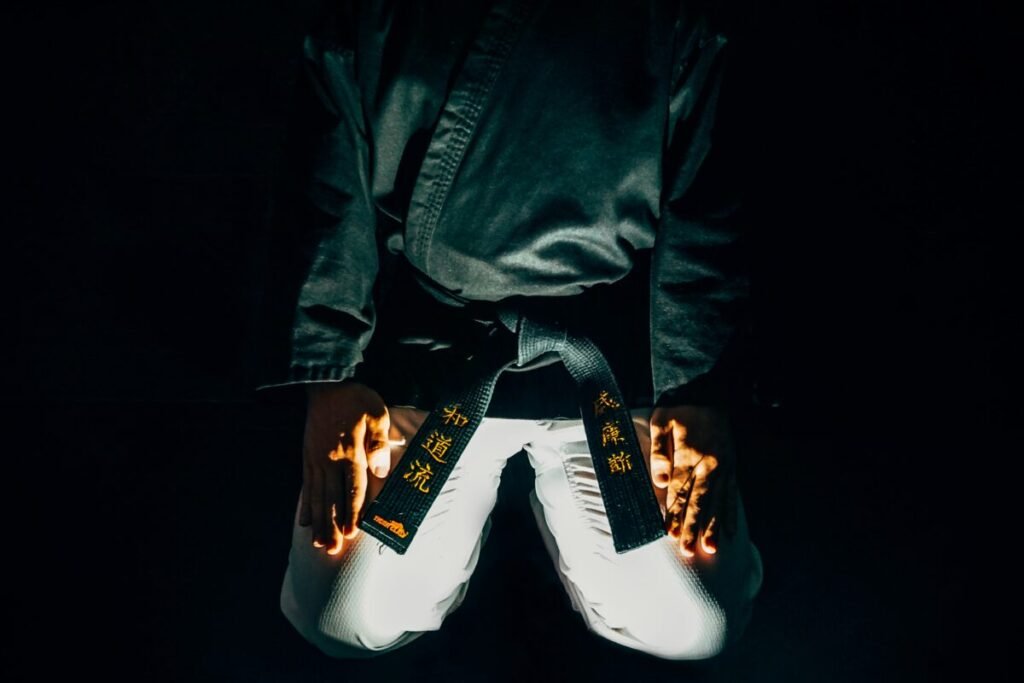
The belt system is a visual representation of your growth. It is not just about the color; it is about the “Geup” (grade) you have earned through sweat and testing. At Om’s, we do not hand out belts. You earn them by demonstrating proficiency in your poomsae, sparring capability, and technical knowledge. A yellow belt should not just know how to kick; they should understand the *why* behind the movement. By the time you reach black belt, you aren’t just a practitioner—you are a mentor to those just starting their own path.
The Olympic & International Competition Pathway
Many students join us with dreams of the Olympics. That path is very real, but it requires a level of commitment that separates the hobbyist from the athlete. It starts at the district level, moves through state championships, and culminates in the National Championships organized by the Taekwondo Federation of India. We have seen 25,000+ students pass through our doors, and the ones who succeed are those who treat every training session as a preparation for the next big stage. If you are serious about competing, we provide the specialized training, conditioning, and tactical analysis required to navigate this competitive road.
Training at Om’s Martial Arts & Fitness Studio
Your first day at our studio might feel intimidating, but you will find a culture of support. We don’t care about your starting fitness level. We care about your willingness to show up. In your first class, we will teach you how to stand, how to breathe, and how to respect the space. You will find that our community is diverse—from children learning focus to adults looking to shed stress. We keep our classes structured because discipline is what provides the freedom to grow. You will leave your first class knowing that you are capable of more than you thought.
Who Should Join Taekwondo?
The beauty of Taekwondo is its accessibility. Kids learn that they don’t have to be the biggest person in the room to be the most confident. Teenagers find a healthy outlet for their energy that helps them during the most formative years of their lives. Adults often find that the mental focus required for Taekwondo acts as a reset button for their professional lives. We have seen students of all ages find a sense of belonging and purpose here. If you are looking for a place that values progress over perfection, you have found your home.
Health & Fitness Benefits of Taekwondo
Beyond the self-defense applications, Taekwondo is a complete fitness system. It is a high-intensity interval training (HIIT) workout in disguise. The constant movement, the explosive kicks, and the core-heavy blocks turn your body into a machine. Beyond the physical, the cognitive load of memorizing patterns and executing complex sequences has been shown to improve mental sharpness. When you train with us, you are not just getting stronger; you are becoming a more focused, resilient version of yourself.
Start Your Taekwondo Journey at Om’s Martial Arts & Fitness Studio
You have read about the history, the techniques, and the benefits, but the only way to truly understand Taekwondo is to step onto the mat. We invite you to experience the atmosphere of our studio firsthand. Whether your goal is to compete for India, learn to defend yourself, or simply get into the best shape of your life, we have a place for you.
Book your free trial class today. Come in, meet Om Sir and the coaching team, and see why we are the premier destination for martial arts in Jaipur. Your future self is waiting for you to take that first step.
[→ Book a Free Trial Class at Om’s Martial Arts & Fitness Studio]
[→ Contact Us / Visit Our Studio]
[→ View Class Timetable & Fees]
Om’s Martial Arts & Fitness Studio – Empowering Jaipur and India through Martial Arts, Fitness & Self-Defense.